A land-only Kenya safari costs for two runs roughly $2,100–$4,200 for a budget 7-day trip, $4,200–$8,400 mid-range, and $8,400–$21,000+ luxury ~ before international flights. The single biggest swing factor isn’t the parks you visit, it’s the accommodation tier you book, followed by whether your vehicle and guide are shared with other travellers or private to your group.
Park fees are the one cost nobody can discount. Kenya Wildlife Service (KWS) reworked its national fee schedule in October 2025, and the Maasai Mara (run separately by Narok County, not KWS) now charges non-resident adults $100 a day from January to June and $200 a day from July to December 2026. Those figures, plus the per-tier accommodation ranges below, are what actually move a quote up or down — not the destination name on the brochure.
At a glance
| Typical trip length | 5–10 days |
| Budget tier (land-only, per person/day) | $150–$300 |
| Mid-range tier | $300–$600 |
| Luxury tier | $600–$1,500+ |
| Highest park fee (Maasai Mara, Jul–Dec) | $200/adult/day |
| Lowest park fee (Nairobi National Park) | $80/adult/day |
| eTA (entry authorisation) | ~$30–$51/person, nationality-dependent |
| Cheapest months | April–June (long rains, lower fees and rates) |
| Most expensive months | July–October (migration season, Mara fees double) |
What actually drives the Kenya safari costs
Four factors do almost all of the work:
- Accommodation tier. This is the biggest lever by far. A mid-range tented camp and an ultra-luxury suite on the same stretch of the Mara can be $500 or more apart per person, per night, for broadly the same wildlife.
- Private vs. shared vehicle. A private 4×4 and guide for just your group costs more than a seat in a shared safari vehicle, but it buys flexibility on timing and photography angles that a shared itinerary can’t.
- Season. The Maasai Mara’s entry fee alone doubles from $100 to $200 a day in July. Lodge rates follow the same pattern ~ April to June (the long rains) is consistently the cheapest window, July to October the most expensive.
- Park combination. Each additional park adds its own entry fee and, often, a transfer. A single-park trip to the Mara is cheaper than a Mara-Amboseli-Nakuru circuit, even at the same lodge tier.
Kenya safari cost by tier (2026/2027)
These are land-only, per person, per day figures, they already include park fees, accommodation, meals and shared game drives unless noted. They’re drawn from current 2026 operator pricing; expect modest, incremental increases for 2027 rather than a dramatic jump, in line with how lodge rates and park fees have moved in recent years.
| Tier | Per person, per day | For two, per day | 7-day trip, for two | What you get |
|---|---|---|---|---|
| Budget | $150–$300 | $300–$600 | $2,100–$4,200 | Shared vehicle, public campsites or basic tented camps, set departure itinerary |
| Mid-range | $300–$600 | $600–$1,200 | $4,200–$8,400 | Private or small-group vehicle, comfortable lodges or tented camps, full board |
| Luxury | $600–$1,500 | $1,200–$3,000 | $8,400–$21,000 | Private vehicle and guide, premium lodges or camps, most drinks and some activities included |
| Ultra-luxury / fly-in | $1,000–$2,700+ | $2,000–$5,400+ | $14,000–$37,800+ | Light-aircraft transfers between parks, exclusive conservancy camps, near all-inclusive service |
A realistic working budget for two people on a first Kenya safari is the mid-range column: comfortable but not flashy accommodation, a private vehicle once you leave Nairobi, and a 6–8 day itinerary covering two or three parks.
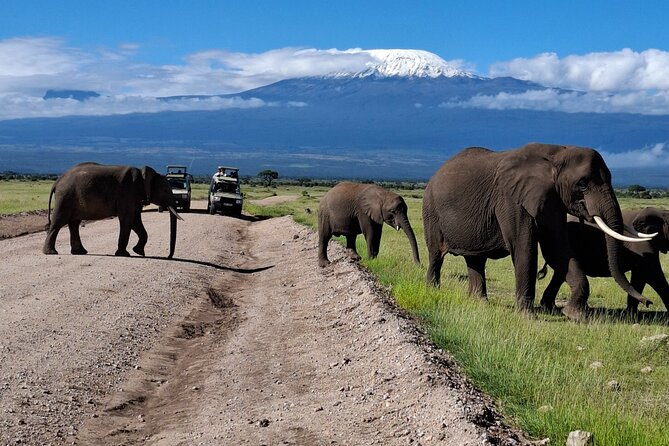
Park fees, park by park
Park fees are charged per person, per 24-hour period (12 hours in the Maasai Mara), on top of your accommodation cost. They’re usually built into the per-day quote above, but it helps to know what you’re actually paying for:
| Park / reserve | Managed by | Non-resident adult fee |
|---|---|---|
| Nairobi National Park | Kenya Wildlife Service | $80/day |
| Amboseli National Park | Kenya Wildlife Service | $90/day |
| Lake Nakuru National Park | Kenya Wildlife Service | $90/day |
| Tsavo East / Tsavo West | Kenya Wildlife Service | $80/day |
| Meru National Park | Kenya Wildlife Service | $70/day |
| Mount Kenya National Park | Kenya Wildlife Service | $80/day |
| Maasai Mara National Reserve | Narok County | $100/day (Jan–Jun), $200/day (Jul–Dec) |
| Samburu National Reserve | Samburu County | ~$70–$85/day |
Two things trip people up here. First, the Maasai Mara isn’t a KWS park, so its rates, rules and payment system are separate from everywhere else, its $100/$200 seasonal split is set independently by Narok County and has changed more than once in recent years, so confirm the current rate before you book. Second, children (generally 9–17) pay roughly half the adult non-resident rate at most parks, and East African citizens or Kenya residents pay substantially less — worth raising with your operator if it applies to anyone in your group. Rates above are current published 2026 figures; always have your operator confirm them in writing as part of your quote, since fee schedules are reviewed periodically.

What’s usually included ~ and what isn’t
Most Kenya safari quotes, at any tier, include park fees, full-board accommodation, a vehicle and driver-guide for game drives, and drinking water in the vehicle. What’s typically extra, and worth asking about before you compare two quotes:
- International flights to and from Kenya
- The Kenya eTA (entry authorisation), roughly $30–$51 per person depending on nationality, apply only through the official etakenya.go.ke portal, not a third-party site
- Alcoholic drinks and premium soft drinks at lodges (often included at luxury tier, rarely at budget)
- Tips for drivers, guides and camp staff
- Optional activities — hot air balloon safaris (around $500+ per person), guided walks, cultural village visits, night drives in private conservancies
- Travel insurance
- Internal flights, if you fly rather than drive between parks
A worked example: 7 days, two people, three tiers
Take a 7-day, two-park route — Maasai Mara and Amboseli — as a concrete example. The structure stays the same at every tier; only the accommodation and vehicle arrangement changes.
| Line item | Budget (for two) | Mid-range (for two) | Luxury (for two) |
|---|---|---|---|
| Accommodation, vehicle & park fees (7 days) | $2,100–$4,200 | $4,200–$8,400 | $8,400–$21,000 |
| eTA (2 people) | ~$60–$100 | ~$60–$100 | ~$60–$100 |
| Tips (driver-guide, camp staff, 7 days) | ~$140–$210 | ~$210–$280 | ~$350–$490 |
| Optional: 1 hot air balloon safari each | Skip | ~$1,000–$1,200 | ~$1,000–$1,200 |
| Land total, before international flights | ~$2,300–$4,500 | ~$5,500–$10,000 | ~$9,800–$22,800 |
International flights aren’t included because they vary enormously by origin city, season and how far ahead you book. Get a current quote for your specific route and add it on top of the land total above — it’s often the single largest line item on the final invoice for long-haul travellers.
How to bring the Kenya safari costs down without gutting the trip
- Travel April–June. The long rains season brings lower lodge rates and, critically, the Mara’s park fee at half its July–December level. Wildlife viewing is still good; it’s simply not migration season.
- Share a vehicle. A set-departure, shared-vehicle itinerary cuts the single biggest cost after accommodation, at the expense of a fixed schedule.
- Pick one or two parks, not four. Every additional park adds its own entry fee and a transfer day. A well-chosen two-park route often beats a rushed four-park circuit on both cost and experience.
- Road over fly-in. Internal flights between parks are fast and comfortable but add real money. A road safari with a private vehicle costs less and lets you see the country between stops.
- Ask what’s bundled. Two mid-range quotes at similar headline prices can differ by hundreds of dollars once you check whether drinks, laundry and a balloon safari are included or extra.
Frequently asked questions
Is $3,000 enough for two people on a Kenya safari?
Yes, for a land-only budget-to-lower-mid-range trip of around 5–6 days, travelling in the April–June low season and keeping to one or two parks. It won’t stretch to a luxury lodge in July during migration season, when the Mara’s park fee alone doubles.
Why do Kenya safari prices vary so much between operators?
Mostly accommodation tier and vehicle arrangement, both described above. A second, less obvious reason: some quotes bundle drinks, laundry and activities while others price them separately, so two quotes with the same headline figure can cover very different trips. Always ask for an itemised breakdown before comparing.
Are Kenya safari costs going up for 2027?
Likely, modestly. Lodges typically publish the following year’s rates from mid-year onward, and the pattern in recent years has been steady, incremental increases driven by lodge rates, periodic park fee reviews and fuel costs, not sudden jumps. The 2026 figures in this guide are the most reliable baseline for planning a 2027 trip; confirm final rates with your operator once 2027 pricing is published.
Does the Maasai Mara really cost double in high season?
Yes. Narok County, which runs the Maasai Mara independently of Kenya Wildlife Service, charges non-resident adults $100 per day from January to June and $200 per day from July to December 2026 — a direct result of the reserve’s shift toward a lower-volume, higher-value tourism model around the wildebeest migration season.
Plan your budget, then your route
Once you know roughly which tier fits your budget, the next decision is which parks and how many days — that’s where the route starts to matter as much as the price. If you’re weighing a pure safari against a safari-and-beach combination, our guide to Kenya safari and beach holiday itineraries breaks down how an 8–12 day trip splits between the parks and the coast. For a tailored quote against your own dates, group size and preferred tier, get in touch with Kili Trails and we’ll build the itinerary around your budget rather than the other way round.
Disclaimer: The information provided in this article is for general travel and planning purposes. Travel conditions, prices, park fees, entry requirements, availability, weather, and regulations may change, so readers should verify current details with relevant official sources or contact Kili Trails Tours & Safaris Ltd for up-to-date advice before making travel arrangements.